I spent a few days on campus of Wageningen UR and Utrecht meeting senior staff from two of the most prestigious agricultural and animal science universities in the world. Following chapters in this essay detail my experiences in meeting with different groups of the Golden Triangle.
Wageningen UR: ‘To explore the potential of nature to improve the quality of life’ – That is the mission of Wageningen UR (University & Research centre). A staff of 6,500 and 10,000 students from over 100 countries work everywhere around the world in the domain of healthy food and living environment for governments and the business community-at-large.
The strength of Wageningen UR lies in its ability to join the forces of specialized research institutes and Wageningen University. It also lies in the combined efforts of the various fields of natural and social sciences. This union of expertise leads to scientific breakthroughs that can quickly be put into practice and be incorporated into education. This is the Wageningen Approach.
meet: BASTIAAN MEERBURG – Head of Department Livestock and Environment at Wageningen UR
The last of my 6 meetings at Wageningen UR, Dr. Bastiaan Meerburg and I became fast confidants sharing spectacular conversations and excitement to further collaboration. We covered ecology, environment, human health, genetic engineering, and importance to this hard work for sake of our kids… Set in just day two of program travel, the enthusiasm and energy I came away with after spending a few hours learning and corroborating with this true expert set the tone for the rest of the my fellowship travels.
Bastiaan explained for me the true value of animal welfare. How the refined concept of OneHealth is so equally concise and genius. He detailed for me his work, and too that of the Wageningen as part of the Golden Triangle (public, private and university conjoined effort detailed in the next chapter below). Research in husbandry practice and monitoring those results to afford a healthy system was his specialty. How public awareness of zoonoses (people getting sick from animals) throughout the Netherlands went from zero-to-sixty back in the mid 2000s due to the potential of an antibiotic apocalypse brewing in Dutch hospitals from the unknowing hands of Dutch pig and Chicken farmers. Running rampant in a highly condensed society – the only solution that proved effective was preemptive eradication of food production practices that utilized slow administration of antibiotics similar to current practice on US domestic CAFOs. As global population demand for food animal products skyrocket – Bastiaan was clear in his thinking, this is not just a Dutch problem, but a global one.
I learned from Dr. Meerburg that the Dutch approach to animal husbandry varied greatly before the outbreak of resistance. With large ruminants, specifically dairy cows, the Dutch approach has always been aligned with pastoral or grazing on grass-lands. A deep connection to their heritage, much of the Dutch dairy industry was very progressive with animal welfare – as the value of clean and healthy milk products from grass-fed cows was equally the desired product of Dutch & German audiences, but a global market competitive advantage. Other areas needed greater focus and effort. Meat product from fowl and swine became the driver for change. Pigs, omnivores that are uniquely connected to the genetics of humans, needed immediate attention as many of the antibiotics used in raising swine were some of the same essential medicines used broadly for human healthcare. Others, not even essential for human treatment, proved to instigate further resistance.
From the meat we eat, the manure we spread into fields and into water system, or even on the hands of that farmer’s young daughter who had no knowledge she was a carrier to contaminate a hospital – superbugs curated by farming are a reality and need immediate attention in the US and around the world.
Dr, Meerburg has contributed original content: “Behind the Horizon” will be profiled in forthcoming SoiltoTable mailing.
Unquestionably, the leading feedback I tune in defending the quality & value of food – is it’s too expensive. Product price over Value is the top driver in most US households, proven in the national statistic comparison for food expenditures introducing essay 2 on Evidence-based Agriculture.
Of any possession, including other perishables like time and patience, food should be heaved to the top of the value chain. That said, I strongly believe that it’s only a matter of awareness to potential risks looming in US production before price relinquishes it’s near singular grasp on food buying habits. This theory would seem solidified by a few recent instances where societal backlash changed practice and general awareness quickly. A few years back, the newly minted power of social media expressed a near immediate US remediation of pink slime in beef processing. More recently, our mainstream media reaction to ebola turned a controlled situation into hysteria. I could only speculate to the impact a medical world with pervasive resistance would have on information outlets and thus general awareness significant enough to enact precautionary change.
Better yet, what we lack is not necessarily more gloom and doom, but instead appreciation for the impeccable upside to personal well-being, societal value, family health, and of that of our surroundings that comes from committing a few extra bucks a month dedicated to buying higher-quality foods of diverse value.
Yes, due to virtually no domestic economies of scale in alternative production; lack of equity and risk capital; lack of equal public dollars supporting initiatives dedicated to alternative vs. conventional agriculture; and because products at market are sold at controlled premium niche prices – this higher quality food is more expensive – at least for now. As proven in other countries, most noticeably the Netherlands, it seems a short-horizon before free-markets will connect opportunity with capital to meet new market evolutions and demand. In the information age, the inevitable future of a market continues to prove as consumer desire. But, somehow we remain food ignorant in the US. Somehow we persist in not knowing the backstory of food, despite requiring information of everything else we buy except what’s most important in subsistence.
“Awareness of issues, and known benefits of remediation become equally impetus to move value ahead of price alone”
So, we need a bit of a (or in our case in the US, an increasingly larger) gut-check in conjunction with efforts detailed in improving production capacity and efficiency of sustainable agriculture. This call to arms will equally require social, cultural and personal commitment to the value of food.
It turns out we have a bit of an excuse with this one. We’re pre-wired to be a short-term thinking animal. In the book Immoderate Greatness William Ophlus does a masterful job concisely defining how and why we’re pre-programmed to be these short-horizon thinkers, detailing from origin of homo erectus -to- progressive societies why we haven’t been able to break from preordained assets we took with us from the wild. Once useful, these now prove as limitations when dealing with living with our others in closer confinement. Fast-forward a few millions years and we’re still living with those defense mechanisms that kept our ancestral generations alive.
We’ve seen some glimmers of evolution recently, especially with broad information sharing. A few industries have discovered and cultivated methods that circumvent the natural short-horizon thought-process intrinsic in us all. Most noticeably, at least from my perspective as it’s part of my past career, is the financial retirement industry’s capacity to engage nearly every American, and their employers, to proactively plan for long-term wealth preservation. Timing was ideal, as driving independent retirement plans cleanly replaced faltering pensions. Milestones reached thresholds, and through decades many retirement goals were reached thanks to smart public and private support, and broad GDP growth & expansion.
The quality of food starts with the plants & animals upon which we feed.
The consumption of food that is clean of toxins, higher in nutrients and safer for your community & planet – a higher quality food – should be perceived no differently than your financial retirement plan. Small, habitual and sustained practice is what preserves the health of any portfolio, including personal well-being, and dollar cost averaging is no different if it were diet or 401K. Pay the farmer now or pay the Doctor later – isn’t the whole story anymore. With the cost of modern care, those Doctor medical bills now cost orders of magnitude greater expensive, you lose those essential perishables of time and patience, and mostly it means you got a health problem(s) and poorer quality of life. HR teams explain that once you begin contributing to an employer sponsored 401K program – you won’t even realize it’s coming from your current paycheck. And boy does it compound! Over the years your investment in safe and healthy food grows and reaps great returns, similar to your financials. Spending an extra 20 or 30% on food quickly becomes the best investment you’ll afford yourself and your family. First by delaying your succession plan, the benefit further presents itself in your general wellbeing while stocking away those investments, and to that of your family’s health as well. Lastly, what habitual practice do you want your grandkids to share, and thus pass to generations-of-the-next?
Without parameters, we’ve afforded too much credit to an industry asked to make and source cheap food.
To clarify, I use diet as a noun. Anything we consume is our diet. The process of going on “a diet” perpetuates misconceptions. How we source and produce our sustenance means a great deal more to the value of that food and the affect on your body than does any caloric or fat content. A concept of eating what you want, as long as it’s of higher quality – is the place it began and where to return. This commitment to sourcing develops awareness, engagement and better chronic eating practices that the folks practicing the verb of a diet desire. When the body operates on proper fuel and framework, including minerals, phytonutrients and lack of toxins and contaminants – the overindulging desires of an overfed and undernourished society reduce as hunger subsides not when the belly is full or stuffed, but when the body feels nourished and sustained. Stacking cheap, refined and quick acting sugar energy into everything we eat surely doesn’t help the body or mind. Playing chemical warfare on the body’s ability to regulate hunger vs. desire, sugar in all forms, but especially refined, is mainlined in the Western diet to a point of system shock, inflammation and as an instigator of modern plague. I’ve heard it defined as the starter-drug to the ill-to-pill reactionary approach to healthcare.
If we have hope of collectively empowering healthcare to be electively preventative, we must begin equally on the farms as between the ears.
Deep roots:
No matter from where you hail, we all share food to be much more than caloric. Further, food runs much deeper than what’s often be defined as ethnic. Instead, I think food and that of its production share a common language amongst any successful lineage proven-out with a national, cultural or regional pride. Heritage and food/ diet are nearly interchangeable in most cultural backgrounds represented Stateside.
Instigating and antagonizing this lost cultural heritage via food could happen in nearly every US household. To utilize an aggregate of traditions to sculpt a new national food identity for the US which can learn from so many successful attributes of our diverse citizens. A StoneSoup for health – the basis for making these cuisines unique becomes focus on sourcing only top quality raw materials. This melting pot for food heritage of the US is lofty goal, but one I believe to have potential of great advocacy and support, when promoted and supported appropriately through awareness and production infrastructure.
Currently done primarily in higher-end white tablecloth restaurants of celebrity chefs, the opportunity is to make the farmer the rock-star of food – not the person mixing the ingredient nor turning on the cook-top. High-end restaurant food quality sourced broadly and diversely as means of preventative health has teeth. That said, we do have cultural food heritage broadly digested in the States – but predominately and stereotyped globally as cheap and fast foods. If not super-sized at the table of the franchised restaurant – this lower quality commoditized foodstuff makes up the vast majority of the center aisles of the grocer – the pinnacle example of sacrificing food value for price and profit. The game theory presents this as the best possible scenario as food desires and production requirements evolve. Delving deeper through awareness and appreciation into food’s backstory as a common core competency to reinvigorate each food-heritage through a new national ideology of food. As the Dutch have done with dairy, glass-house horticulture and recently clean meats – owning a positive persona focuses proper attention.
Based on proper financial drivers supporting an innovation economy, improving raw materials in conjunction with informing consumers of the true and accurate value of reducing risk through cleaning a food system of neurotoxins, hormone disruptors and animal steroids will have positive recourse with lasting effects to body, ethos and generation ahead. A roughly painted picture of OneHealth in the US could be cultural or regional pride that celebrates diversity of population – equally. That wonderful nuance that makes us each so unique, but equally as common amongst every Joe seems a bridge built by getting more folks thinking again about food for it’s value to human and environmental health, and developing a shared pride associated to each diverse recipe using nothing but healthier and safer foods of greater value.
First, I am fine; thank you for all the emails and calls. I’m in Turkey for the month of October as part of an Eisenhower Fellowship program focused on food, water and production. I left the Capital city of Ankara on Thursday and remain safe. My thoughts go out to all the families who’ve lost in this senseless violence. Above, a photo taken just this week presenting a cobbled together ancient Ankara Castle as inspiration of a society with millenniums of resilience (note the integrated Roman ruins). Stand with Turkey!
Here’s to a more empathetic and diplomatic future!
Identifying food as primary human and planetary healthcare:
@WhatCost is a series of essays evaluating how circular agriculture is the inevitable future for us all. Through embracing the opportunity of diversifying our production portfolio to service growing market demand, the States mitigates intensifying global market trends and concerns of nutrient security while strengthening ties with tight allies. www.atWhatCost.us
In this first introductory essay, I overview the 4 concept pillars which reference more than 30 global-thought leaders visited while traveling the Netherlands & Brussels this past May. If you’d like to read ahead, more details can be found:
In future S2T mailings I’ll showcase key contacts profiled in different essay chapters. I’ll also share original content penned by new friends met during travel in May and now October, as well as other contributors looking at the problems and pragmatic business solutions for the planet our kids will inherit.
(photo:October 8th in front of the National library in Ankara)
In just one week I’ve learned how much respect & adoration the States should have for our key ally Turkey. If not the epicenter, than surely the bridge of global influence, this country of 98% Muslim inhabitants well represents the West while keeping a working relationship with the Middle East, managing turmoil with their immediate neighbors, and equally keeping Russia at bay.
Regarding Turkey’s food (the premise of my Fellowship study program) well, it’s amazing! Fresh, vibrant, local, wholesome would be a few ways I’d best describe it thus far. You see, Spain, France, Greece and Italy are the pinnacle of food cultures. Even Switzerland, Austria, Croatia and Portugal have immense clout. The secret seems evident – they’re all connected by being directly on, or one degree of separation from, the richness of the Mediterranean and its climate. That capacity to deliver healthy & diverse crops, and preserve social & cultural food values over thousands of years has made each of the aforementioned countries of some of the healthiest societies & equally lowest healthcare costs in the developed world.
(Safa Uslu – Int. Eisenhower Fellow & Turkey’s Min. of Energy head of multinational relations)
The country not yet included in the discussion is Turkey. With the 4th largest imprint on the Mediterranean, and when including the bounty of the Black Sea, Turkey has the same milage of coastline as Italy, and far more land mass than any of their EU brethren. Turkey has resources to not only feed well their 77M populous, 44M tourists and 2M refuges – they produce significant gross export.
Now, with plans of investing in agriculture at significant scale, let’s hope the Turks don’t forget the value of preserving the infrastructure and food culture afforded by their 3M farmers who often work the land with husbandry in a similar practice with 10 generations prior. I will continue to promote the importance of what’s happening Stateside with changing consumer sentiment and within an agricultural system of intrinsic flaws. To better appreciate that a flavor of modern farming which includes advancement in circular practice is where the next innovation economy lies is equally essential for us in the States and the future practices of Turkey. Being coerced into thinking the grass is greener on the side of industrial conventional practice, just as many domestic consumers in the States, awareness of the true cost of food is vital to Turkey’s future. As we all continue to evaluate the importance of nutrient security and not just caloric output in this unique region, we’re reminded we all share this shrinking planet and must plan and act accordingly.
Evaluating a proven Dutch model for producing safe and healthy food as risk mitigation to our near singular commitment to conventional practice increasingly susceptible to evolving regulatory & market forces, atWhatCost is a six part long-form essay series detailing how investments in Circular Agriculture positioned in a well-supported innovation economy affords domestic US production a pragmatic future of paying for human & environmental healthcare through the food we eat. The findings of my EisenhowerFellowship program to the Netherlands focus primarily on reducing current exposure in food animal production through deeper appreciation of a ‘true cost’ of food, and further promotion of system resilience & greater precision to empower food value as foundation for future wellbeing and ecological vitality.
Coordinated federal and state effort against superbugs would seek to curb use at farms, hospitals
The White House on Friday issued the most extensive plan ever to fight drug-resistant bacteria, or superbugs, seeking to curb antibiotic use at farms and hospitals—and promote discovery of lethal bugs and antibiotics to kill them.
The plan, formally known as the National Action Plan for Combating Antibiotic-Resistant Bacteria, sets goals to reduce by 50% to 60% illnesses caused by some of the most lethal microbes known to man by 2020. It seeks enhanced laboratory capacity across the U.S. to detect the worst pathogens, and it calls on federal agencies to set new rules aimed at curbing dangerous microbes.
The Obama administration’s strategy, which can mostly be achieved through agency regulations and guidance but needs Congress to appropriate the funds, envisions federal and state agencies engaging in coordinated efforts, all largely based on the idea that whatever is measured can be managed.
“It is the boldest move against antibiotic resistance by any U.S. administration ever,” said Kevin Outterson, a Boston University law professor, researcher and author on antibiotic resistance. He predicted the initiative, along with voluntary efforts by companies such as McDonald’s Corp. and Costco Wholesale Corp. to reduce the use of meat from animals routinely fed antibiotics “will actually bear fruit quickly.”
Sen. Lamar Alexander (R., Tenn.), chairman of a key Senate committee on health issues, said, “The President has focused on a real concern….The Senate health committee already is working to help spur the development of new and effective antibiotics. I look forward to reviewing the details of the President’s plan.”
Some doctors noted that there have previously existed similar, but lower-profile, interagency plans regarding drug resistance at the Food and Drug Administration and other U.S. health agencies. But in this case, they noted, President Barack Obama’s budget calls for an additional $1.2 billion to be spent in the effort and, if enacted by Congress, that money can potentially make a difference.
Drug-resistant bacteria are responsible for some two million illnesses annually in the U.S. alone, and more than 23,000 deaths. Recent outbreaks at U.S. hospitals after routine scope-diagnostic procedures have made the threat from superbugs more vivid in the public’s mind.
John H. Powers, a George Washington University medical professor, generally praised the plan but said it “needs to be more patient-focused, not bug-focused.” He called on federal officials, for instance, to gauge patient outcomes and see if they improve with new measures and antibiotics. Dr. Powers has noted that current law carries rewards to companies that develop antibiotics even when they haven’t been tested specifically against drug-resistant bugs.
The White House plan proposes eliminating a farming practice in which cows, chickens and other food animals receive antibiotics to help them gain weight faster. This overuse is widely believed to have contributed to drug resistance.
In late 2013, the FDA asked drug companies to voluntarily stop using antibiotics to promote animal growth. The Obama plan says the Agriculture Department should finance the development of alternatives to antibiotics that are used to treat diseases in livestock and poultry and promote growth.
The White House effort comes as a number of meat processors and restaurant chains have voluntarily moved to reduce or eliminate antibiotics use in their meat supply in response to consumer preferences, rather than any regulations.
Meat and animal-drug-industry officials said the Obama administration plan largely matched what the industry is already doing to comply with the 2013 FDA guidance.
“Most of the [Obama administration] plan outlines actions that are already well under way,” said Tom Super, spokesman for the National Chicken Council, which represents poultry companies.
Some public-health groups criticized the Obama administration for not doing more to curb the use of antibiotics in poultry and livestock. Mae Wu, an attorney at the Natural Resources Defense Council, said the drugs should be used only to treat animals that are sick.
“The plan continues to allow the routine feeding of antibiotics to animals that live in the crowded conditions endemic to industrial farms,” Ms. Wu said.
Steven Gordon, chairman of infectious diseases at the Cleveland Clinic, said the number of antibiotics prescribed to human patients when they haven’t been needed has been increasing in recent years, and he hailed the plan as “elevating this issue to a level we haven’t seen before.”
Other specifics in the initiative include calling for states to set up programs to combat drug resistance. Within five years, it urges, all 50 states plus the District of Columbia and Puerto Rico should have such programs in place. It also urges the Centers for Disease Control and Prevention to double tuberculosis screening among migrants to prevent the importation of multi-drug-resistant tuberculosis.
It’s been a big month for menu changes at the nation’s largest food companies, including:
Dunkin’ Donuts will remove the whitening agent titanium dioxide from its powdered donuts.
McDonald’s and Costco will sell only antibiotic-free chicken by 2017 (the home of the Big Mac also announced it will start selling kale).
Nestle will remove artificial flavoring from its 250 chocolate products by the end of this year.
But these changes and others weren’t just to tweak the recipes. Increasingly, nonprofits and bloggers are pressuring Big Food to remove chemicals and preservatives from their products — or face the wrath of social media.
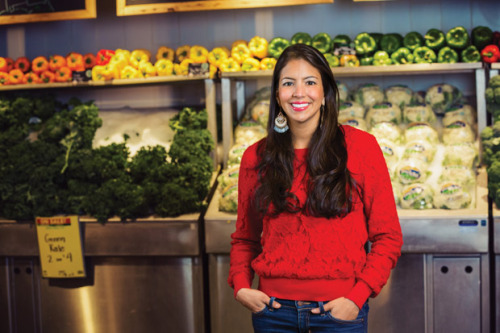
The person most identified with the movement is not a politician, policymaker, or even a trained scientist. She’s a 34-year-old who left a career as a managerial consultant to start her own nutrition blog in 2011.
Her name is Vani Hari, best known as “Food Babe.”
Though she wasn’t involved the above examples, she’s gotten Subway to say it will stop using a plastic-based additive she dubbed “the yoga mat chemical” in its bread.
Chipotle announced it would not use genetically modified crops. And she takes credit for Kraft’s pledge to stop using yellow dyes in three mac-and-cheeses.
Time magazine named her one of its “30 Most Influential People on the Internet,” and she released a book last month and announced plans for a TV show.
But her crusade is not without controversy. Hari’s lionized by her legions of followers, dubbed the “Food Babe Army,” but vilified by a vocal group of research scientists, some of whom argue she’s doing more to hurt the field than help it.
Critics deride her as a dilettante who mucks the science (sometimes purposefully), a “fearmongerer” who preys upon the ignorance of a science-illiterate public for her own profit.
Her most ardent critic is Yale neurologist Steve Novella who called her “the Jenny McCarthy of food activism.”
But love her or hate her, one thing is clear: Hari’s changing what we eat.
The whole foods movement, which rejects processed foods, additives and genetically modified crops, has been around since at least 1971, when organic-food pioneer Alice Waters opened her California restaurant Chez Panisse.
But Vani Hari’s vigilante-style food finds its roots at the turn of this century.
Books like Eric Schlosser’s 2001 “Fast Food Nation” revealed the horrors of our food system, inspired by the work of Upton Sinclair’s 1906 novelistic exposé “The Jungle” of the meatpacking industry.
Morgan Spurlock’s 2004 documentary “Super Size Me,” which took on the health risks of consuming McDonald’s food, followed, then Michael Pollan’s 2006 book“Omnivore’s Dilemma.”
The three works pushed the whole-foods movement to the forefront, though mostly among wealthy and middle-class families.
Organizations like The Center for Science in the Public Interest and Environmental Working Group lobbied for curbs on marketing junk food to children, for bans on trans-fats, and for greater transparency about food ingredients, especially about the growing list of added chemicals, which activists say are not properly researched by the FDA.
The Internet fueled the movement, says Andy Behar, CEO of the nonprofit group As You Sow.
“I think the whole Instagraming pictures of their grilled cheese is part of the meme today of ‘Yeah I am aware of what I eat,’” he says. “Food is not just fuel; it has a deeper meaning. People are celebrating every meal.”
No wonder then that global sales of “healthy food products” are expected to reach $1 trillion by 2017. Labels like “organic” and “all-natural” increasingly spur sales, even if they are often misleading.
In 2010, organic food captured $57.3 billion in sales; this year this number is expected to nearly double to $104.5 billion.
A recent Nielsen study of 30,000 people found that 88% of consumers are willing to pay more for “healthier” foods — and the biggest slice of this premium-paying pie are millennials.
Health-food stores and farmers markets have grown in tandem with the increasing demand.
In 1994, for example, there were only 1,755 farmers markets in the US. In 2013, there were 8,144.
What was once the purview of hippies and vegans has now become serious academic business.
Dr. Marion Nestle, professor of nutrition, food studies and public health at New York University says that there were only two food studies degree-granting institutions when she started at NYU in 1996. Now there are more than 20.
Out of this growing awareness came a greater unease, epitomized by the “pink slime” campaign.
After a series of investigative reports into “lean finely textured beef” products by The New York Times, British chef Jamie Oliver produced a series called “Food Revolution.”
Its Season 2 premier, in 2011, focused on the same product, calling it “pink slime.” At the end of the episode, Oliver poured ammonium hydroxide on a batch of meat — the process by which the beef filler was made — in front of a disgusted live audience.
Freelancer Bettina Elias Siegel took note and started her own online petition to get pink slime out of school lunches, amassing more than 250,000 signatures in two weeks.
Supermarkets across the country started to ban products with pink slime. Schools followed suit, starting with New York City.
The “pink slime campaign,” which Slate columnist Daniel Engber called a brilliant framing campaign, “all because of a shift from four matter-of-fact words to two visceral ones,” was a resounding success.
A similar coup spearheaded by 16-year-old Mississippian Sarah Kavanagh targeted Gatorade’s use of brominated vegetable oil — a chemical banned in Europe for possible health concerns in animal studies.
She, too, started a petition, acquired nearly a quarter of a million supporters, and caught the eye of PepsiCo, who then announced that they would rid their sports drink of this chemical.
Though Hari had already launched her blog, pink slime and Gatorade wins showed her the limitlessness of her opportunities.
“I thought, ‘Wow, an everyday person like myself can inspire change. Why don’t I try it?’ ” Hari tells The Post.
Hari was invited to Chick-fil-A’s corporate headquarters, after which the company announced plans to phase out chickens raised on antibiotics.
“This was a huge win. Not only because it helped the whole issue, but because it inspired other companies, like McDonald’s, to change,” she says.
Then there was the “yoga mat chemical” campaign — by far Hari’s most publicized food advocacy win. The chemical, azodicarbonamide, is used to bleach and condition flour in more than 500 foods, but is also found in plastics and, of course, in yoga mats.
It’s considered by the FDA to be “GRAS,” or generally recognized as safe.
By distilling this complex story down to a tweetable statement: “Yoga mat chemicals are in your Subway bread,” Hari was able to reach, gross out, and galvanize groups of consumers and hit Subway where it hurt most: its brand.
“Subway had to respond to the media blitz. It went worldwide. I was interviewed everywhere,” Hari tells The Post. “Before my campaign no one in the world knew about azodicarbonamide.”
When Subway announced that it would be removing azodicarbonamide from its breads, the company refused to give credit to Hari, instead insisting that it was planning on doing so anyway.
But the result was clear: Hari and her army are powerful.
Subway has suffered from an onslaught of bad publicity since the Food Babe petitioned the chain to remove the ‘yoga mat chemical’ ingredient from its bread.Photo: AP
Most recently she shepherded a campaign against the antioxidant butylated hydroxytoluene (BHT) used in many cereals to keep it the vegetable oils from going bad.
Though generally recognized as safe by the FDA, the chemical is banned in Europe and has been linked in some animal studies to certain types of cancer.
Respected food-advocacy organizations have taken note of Hari’s powers of persuasion. As You Sow was behind the successful Dunkin’ Donuts campaign, which focused on removing nanoparticle titanium dioxide from powdered donuts.
They took a cue or two from Hari’s. Their current work on lead found in chocolate also focuses on highly tweetable nuggets of information, easily understood by the masses.
“Internally we’re trying to tailor messages to be more digestible,” says As You Sow president Danielle Fugere. “It’s something we struggle with because we want to give the full information, the full background. But it’s also important to make it easy to understand.”
This ability is the source of both Hari’s success and her critics’ ire.
Researchers take issue with Hari’s simplistic explanation of the science. Many of these chemicals she has focused on, experts argue, have shown no proof to be harmful in the small amounts present in our food.
Take her statement that “There is no acceptable level of any chemical to ingest ever” (really, critics responded, even H20?). She’s confused ingredients — mixing up, for example, propylene gycol and another called propylene glycol alginate.
Two very different chemicals, the former used in antifreeze and the other derived from kelp and used in beer.
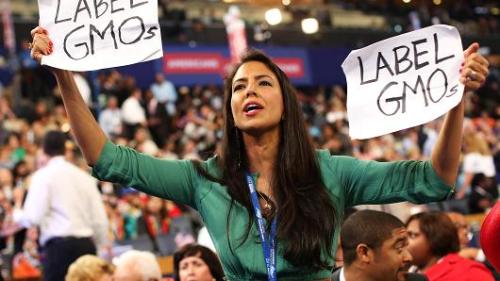
Then there’s the issue of genetically modified organisms, or GMOs. A number of food vigilantes object to crops being altered on the genetic level, saying that it’s unnatural.
But scientists counter that humanity has been “altering” crops for centuries — through selective farming — and that tinkering with grains to make them more abundant can help alleviate world hunger.
Hari also makes money by linking to “healthy” alternatives, which has led to conflict-of-interest accusations, while her posts sometimes drift into tinfoil-hat territory.
Items about the oxygen levels on planes and on harmful effect of microwaves on food have been removed — and she admits that she’s made some “mistakes” along the way but that her heart is in the right place.
In the end, if she’s getting eyeballs on labels, does it matter if she’s right?
“If she gets the science a little bit wrong, ultimately the bigger point is that this stuff shouldn’t be in our food,” Fugere says. “That she’s implying that you need a science degree to comment on food makes her point.”
Not everyone agrees. NYU professor Nestle says that Hari “gives the movement a bad name” and that “getting the science right is extremely important.”
“She’s making scientific judgments of these chemicals that may or may not be valid or may or may not be meaningful,” Nestle says.
“I’d love to see someone like her work on issues like protecting the quality of school lunches, keeping agriculture in line with our health policies, how to figure out how to stop companies from marketing junk foods to kids. Issues like those.”
An LA Times reporter and photographer find that thousands of laborers at Mexico’s mega-farms endure harsh conditions and exploitation while supplying produce for American consumers.
The tomatoes, peppers and cucumbers arrive year-round by the ton, with peel-off stickers proclaiming “Product of Mexico.”
Farm exports to the U.S. from Mexico have tripled to $7.6 billion in the last decade, enriching agribusinesses, distributors and retailers.
American consumers get all the salsa, squash and melons they can eat at affordable prices. And top U.S. brands — Wal-Mart, Whole Foods, Subway and Safeway, among many others — profit from produce they have come to depend on.
These corporations say their Mexican suppliers have committed to decent treatment and living conditions for workers.
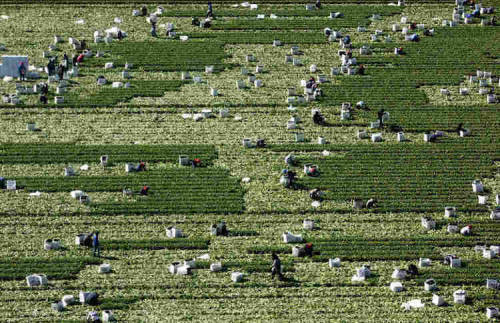
But a Los Angeles Times investigation found that for thousands of farm laborers south of the border, the export boom is a story of exploitation and extreme hardship.
Many farm laborers are essentially trapped for months at a time in rat-infested camps, often without beds and sometimes without functioning toilets or a reliable water supply. Some camp bosses illegally withhold wages to prevent workers from leaving during peak harvest periods.
Laborers often go deep in debt paying inflated prices for necessities at company stores. Some are reduced to scavenging for food when their credit is cut off. It’s common for laborers to head home penniless at the end of a harvest.
Those who seek to escape their debts and miserable living conditions have to contend with guards, barbed-wire fences and sometimes threats of violence from camp supervisors.
Major U.S. companies have done little to enforce social responsibility guidelines that call for basic worker protections such as clean housing and fair pay practices.
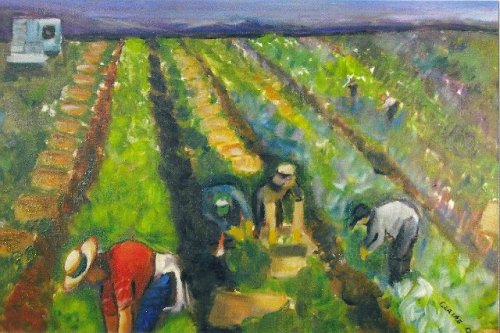
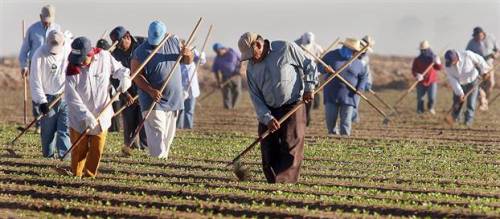
The farm laborers are mostly indigenous people from Mexico’s poorest regions. Bused hundreds of miles to vast agricultural complexes, they work six days a week for the equivalent of $8 to $12 a day.
The squalid camps where they live, sometimes sleeping on scraps of cardboard on concrete floors, are operated by the same agribusinesses that employ advanced growing techniques and sanitary measures in their fields and greenhouses.
The contrast between the treatment of produce and of people is stark.
In immaculate greenhouses, laborers are ordered to use hand sanitizers and schooled in how to pamper the produce. They’re required to keep their fingernails carefully trimmed so the fruit will arrive unblemished in U.S. supermarkets.
“They want us to take such great care of the tomatoes, but they don’t take care of us,” said Japolina Jaimez, a field hand at Rene Produce, a grower of tomatoes, peppers and cucumbers in the northwestern state of Sinaloa. “Look at how we live.”
He pointed to co-workers and their children, bathing in an irrigation canal because the camp’s showers had no water that day.
At the mega-farms that supply major American retailers, child labor has been largely eradicated. But on many small and mid-sized farms, children still work the fields, picking chiles, tomatillos and other produce, some of which makes its way to the U.S. through middlemen. About 100,000 children younger than 14 pick crops for pay, according to the Mexican government’s most recent estimate.
Pedro Vasquez, working the chile pepper fields near Leon, Guanajuato, is one of the estimated 100,000 Mexican children younger than 14 who pick crops for pay, according to the government’s most recent estimate. He is 9 years old.
During The Times’ 18-month investigation, a reporter and a photographer traveled across nine Mexican states, observing conditions at farm labor camps and interviewing hundreds of workers.
At half the 30 camps they visited, laborers were in effect prevented from leaving because their wages were being withheld or they owed money to the company store, or both.
Some of the worst camps were linked to companies that have been lauded by government and industry groups. Mexico’s President Enrique Peña Nieto presented at least two of them with “exporter of the year” honors.
The Times traced produce from fields to U.S. supermarket shelves using Mexican government export data, food safety reports from independent auditors, California pesticide surveys that identify the origin of imported produce, and numerous interviews with company officials and industry experts.
The practice of withholding wages, although barred by Mexican law, persists, especially for workers recruited from indigenous areas, according to government officials and a2010 report by the federal Secretariat of Social Development. These laborers typically work under three-month contracts and are not paid until the end. The law says they must be paid weekly.
The Times visited five big export farms where wages were being withheld. Each employed hundreds of workers.
Wal-Mart, the world’s largest retailer, bought produce directly or through middlemen from at least three of those farms, The Times found.
Bosses at one of Mexico’s biggest growers, Bioparques de Occidente in the state of Jalisco, not only withheld wages but kept hundreds of workers in a labor camp against their will and beat some who tried to escape, according to laborers and Mexican authorities.
Asked about its ties to Bioparques and other farms where workers were exploited, Wal-Mart released this statement:
“We care about the men and women in our supply chain, and recognize that challenges remain in this industry. We know the world is a big place. While our standards and audits make things better around the world, we won’t catch every instance when people do things that are wrong.”
The real truth is that we’re work animals for the fields
It wasn’t exactly a romantic event, but it was billed as a matchmaking opportunity, complete with a “speed dating” session.
For the dozens of Vermont food producers and buyers in attendance, though, the gathering at Vermont Technical College this week was strictly business.
“I was very excited to come down and expand my reach beyond Chittenden and Washington County and get some of our products down south or even regionally,” said farmer-producer Beth Whiting.
She and her husband own Maple Wind Farm in Huntington and Richmond, which specializes in pasture and grass fed meats.
On the buyers’ side were many familiar co-ops along with wholesale and institutional food suppliers. But there were also some relatively new faces to the local foods scene: the big chain supermarkets.
“We see an emerging trend that’s really growing and we have to get better at that,” said Scott Evans, vice president of grocery and merchandising at Price Chopper.
Evans said that trend is increasing customer demand for local products and an expectation that even a large supermarket chain with 135 stores should carry them.
“As we start to work with the local areas like Vermont and the towns that we’re in it’s really important for us to find those products and partner with those different suppliers.” – Scott Evans, vice president of grocery and merchandising at Price Chopper
“There’s this loyalty that customers have with those products and it makes absolute sense because it strengthens their communities,” he explained. “As we start to work with the local areas like Vermont and the towns that we’re in it’s really important for us to find those products and partner with those different suppliers.”
For a company used to working with large food distributors, one challenge is adapting the company’s supply chain to deal with small producers.
“Obviously when we work through distributors it makes life a bit easier for us, but sometimes it doesn’t make sense.“
“Obviously when we work through distributors it makes life a bit easier for us, but sometimes it doesn’t make sense,” said Evans. "We’re trying to find the flexibility and the ability to work with partners to get their products to our stores in whatever fashion works best for both of us.”
Representatives from Shaw’s and Hannaford supermarkets were also at this week’s event.
From the producer’s perspective, the challenges of supplying a large chain store include the time it takes to increase production. Producing a premium product also costs more, so there’s the question of meeting the price point for both the store and the producer.
Demand for local food is also happening on an institutional level.
This week the food service giant Sodexo filled a full-time position dedicated to increasing the share of Vermont products the company provides to schools and hospitals.