Vanishing Food Biodiversity – restart locally

– – – – 

Biodiversity, in relation to our food sources, is all about the thousands of different types of edible foods nature has provided for all human life at this time, and for future generations to come.

Biodiversity is the link between all types of organisms found on the planet. Each particular life form has its link in the Earth’s web of life. Even if the smallest of organisms breaks down, it will threaten the balance of the entire ecosystem.  Causes of this severe breakdown in our traditional food systems are debatable. Climate change, the steady decline in the number of farmers, small seed companies being bought out by big corporations – as well as human activity – are just a few of the major reasons suspected. Human beings are thought to be the most dangerous cause of all.

Big corporations that are acquiring most of the seed market, on the entire planet, gives these few companies a dangerously high amount of power over the worlds food supply. These few companies have the power to patent their seed varieties. Once they have a patent on any type of food crop, they can then prevent anyone else from exchanging or saving those seeds. Humans have saved seeds for their next seasons crops since humans first learned to grow their own food. For people all over the planet, especially the poorest of countries, this means the end of a natural way of acquiring crops for the next seasons harvest.

UN Food Program Halts Aid to Syrian Refugees – your lens

Food focused  —>  perspective on the future

– – – – 

Our future table is likely to be shaped by many factors, from diminishing resources and growing human populations to increased self-awareness of the impact food has on health to cultural phenomena like food fetishism, culinary hedonism and ritual.

For a sense of what we will not be eating, perhaps we can look to the advice of the past 100 years and see where that has gotten us.

In the 1930s, the chemical company DuPont adopted the (paraphrased) slogan “Better living through chemistry,” and in many ways this idea has loomed large over the evolution of food and foodlike substances in the past century: From Crisco to canned cheese, we’ve forsaken real food for convenience. There is no question in my mind that our relationship with food has been severely derailed in recent years, and I think it’s not illogical to draw a connection between this derailment and the rise of modern disease and the decline of natural resources on our planet.

As the average body mass in the developed world has grown consistently over the past century, and the rates of autoimmune diseases, type-2 diabetes and other modern diseases have gone up, our relationship with food seems to have become much more antagonistic. Many of us look at culinary indulgences as corporal sins that must be neutralized through physical penitence. My Saturday pizza binge must be zeroed out with 45 minutes of looping my legs through imaginary figure-eights on an elliptical trainer, plugged deeply into the frenetic chyron of CNN, until a digital ticker tells me that I’ve paid my dues for yesterday’s pleasure.

I remember clearly, 25 years ago when I first visited Spain, being shocked that there were so few grocery stores and so many markets. The fish at the markets came from nearby waters, the produce from the surrounding countryside. On recent visits to Spain I have noticed a much greater proliferation of large, “box” grocery stores and far more fast-food chains. While the markets still appear to be as busy as I recall, the people who patronize them seem to be split into two camps: older women shopping for produce, and everyone else taking photos of food and updating their social media status.

This fetishistic obsession with food is evident in the ever-increasing number of celebrity chefs and food-related television shows, websites and blogs. All of the attention being paid, however, doesn’t seem to be alleviating the real corporal and environmental crises we are experiencing as byproducts of our highly developed modern food systems. In fact, in the past 25 years the rates of obesity in Spain have more than doubled, with childhood obesity and chronic illness also on the rise. Anecdotally, it would appear that the rise of chronic illness has gone hand in hand with the fall of traditional cooking.

What will that mean for us in 35 years? Our bodies and our planet can only sustain so much abuse. Unless we’re resigned to living longer, sicker lives, something’s got to give.

To take a stab at guessing what we might be eating, we need to think about all the things that are affected by how we eat. I often forget that I’m not an individual, but rather part of a complex community — a community of cells, muscle fibers, bacteria, nervous systems and bones. I am also part of a greater community, a family, a circle of friends, a group of colleagues, a neighborhood, a vibrant city, a unique planet. The way I eat has a direct impact on all of these communities, some more explicitly than others, but each community is affected by the choices I make about the food that goes in my mouth.

For as long as we have been social creatures, food has been at the heart of any community. In the most basic of terms, we formed bands, tribes, villages and cities to increase our chances of survival, initially to hunt and gather and later to cultivate and distribute food.

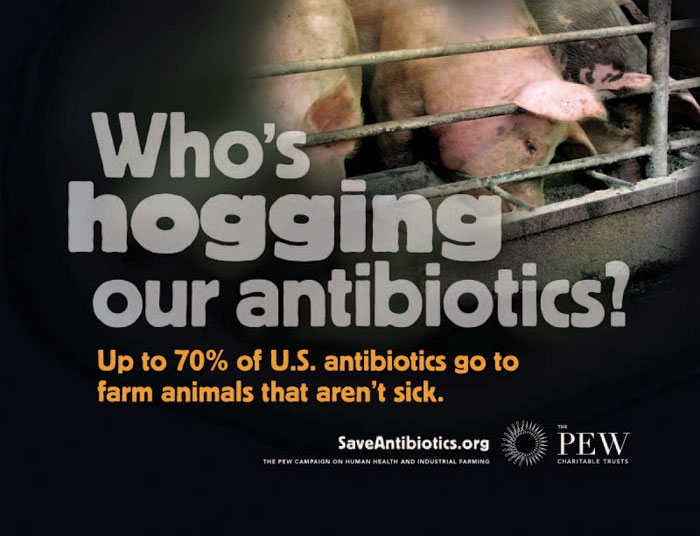
New Analysis Says FDA Farm Antibiotic Reduction Won’t Work | WIRED

How one local brewer used quality to change an industry

– – – 

Samuel Adams stems from a Vienna lager recipe handed down from his father that Koch first brewed in his kitchen in 1984. Since then, the Harvard Business School graduate went from a Boston brewery so small that Koch’s Samuel Adams Boston Lager had to be brewed under contract in Pittsburgh, Portland, Cincinnati and elsewhere — with SABMiller handling some production.

Today, Koch’s Boston Beer Co. has a research-and-development facility, barrel room and tour center in Boston, and two large brewing facilities in Cincinnati (at the old Hudepohl-Schoenling brewer that once employed Koch’s dad) and Breinigsville, Pa. (in an old Stroh brewery). As a result, the company’s beer production has soared from 63,000 barrels in 1989 to nearly 2.9 million in 2013.

However, Boston Beer’s total production was 3.4 million barrels last year, thanks to a diverse group of offerings that were notably absent from Koch’s kitchen 30 years ago. In 2000, Boston Beer launched its Twisted Tea brand of flavored malt beverages that still bolsters the company’s $3 billion business to this day. After stumbling a bit with the Hard Core cider it released in 1995, Boston Beer scored a huge coup when it introduced its Angry Orchard cider line nationwide and became the top-selling cider producer in the country, according to market research firm IRI.

‘After 30 years, I’m very aware of how capable the big brewers are at competing in the marketplace.’Jim Koch, founder of Boston Beer Co.

Boston Beer is entering a future in which it not only has to fend off large brewers with its own products and acquisitions, but has to remain relevant to craft-beer drinkers who have a tendency to gravitate to the next great beer of the moment. It also has to adapt to a shifting craft-beer landscape in which consolidating distributors, expanding craft brewers and more than 3,000 total U.S. brewers present as many obstacles as opportunities.

Interview:

Not seeing forest for the trees – school lunch nutrition waiver

Agricultural Trees for the Green –  Holiday Trees could be more local

– – – 

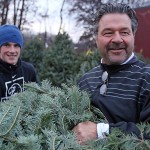
A premium balsam fir can be had for $30 to $40 for
6- and 7-foot trees, respectively, while Fraser firs can run slightly higher, according to Wilson. “Christmas trees are a true supply-and-demand item,” he said. “And lately there’s been more of a supply …which has turned the price down a little bit. There’s more growers, and the growers that are there are growing more trees.”

Massachusetts ranked 21st among U.S. states for the number of Christmas trees harvested at 52,188, according to the 2012 federal agriculture census — the latest report available. The state Department of Agricultural Resources’ MassGrown site lists 83 Massachusetts farms where consumers can cut their own.

Lambert’s Rainbow Fruit — which has Dorchester and Westwood locations and satellite lots in Hingham, Braintree and Pembroke — bought its trees from Canada up until this year, when it turned to North Carolina.  “Canada is going south,” Bill Lambert said, referring to Sherbrooke, Quebec, growers. “They cut all the tips of the trees and put them in big piles. And they ended up … with two to three feet of snow, and they couldn’t dig them out.” Frazer firs have replaced balsams as the tree of choice locally, according to Lambert. “They hold their needles a little better, they’re a little stronger,” he said.

The average time to grow a 6- to 7-foot Christmas tree is seven years.

“Most growers thought it was a very good growing season,” said Jim Colburn of MerriHill Tree Farm in Merrimac. “In our area, it was a little too warm and dry, but overall I think it was … pretty good.”

Overuse and Depletion – making WATER the new oil

Climate change gives local agriculture a boost – tweak but true

– – – 

To be blunt, experts say that the New England food economy stands to benefit from the damage that global warming threatens to do to other parts of the country—especially because climate models don’t predict that the Northeast, unlike other regions, will see any significant decrease in annual rainfall. Drought in California is already causing crop failure there, while the vast scale of the farms in the Midwest makes it difficult for growers to be flexible and reactive enough to keep up with unpredictable weather patterns. David Wolfe, a professor at Cornell University who studies agriculture and climate change, said it’s likely that supermarket buyers—the folks who order the food that we see on shelves—will be glad to have local options at a time when, say, the tomato harvest in California can’t be relied on to deliver. “They might be thinking, ‘Well, we can’t count on those guys because every other year they have a problem with drought,’” Wolfe said.

EVENT: Carbon Sequestration via Grassland Restoration – at the Impact Hub